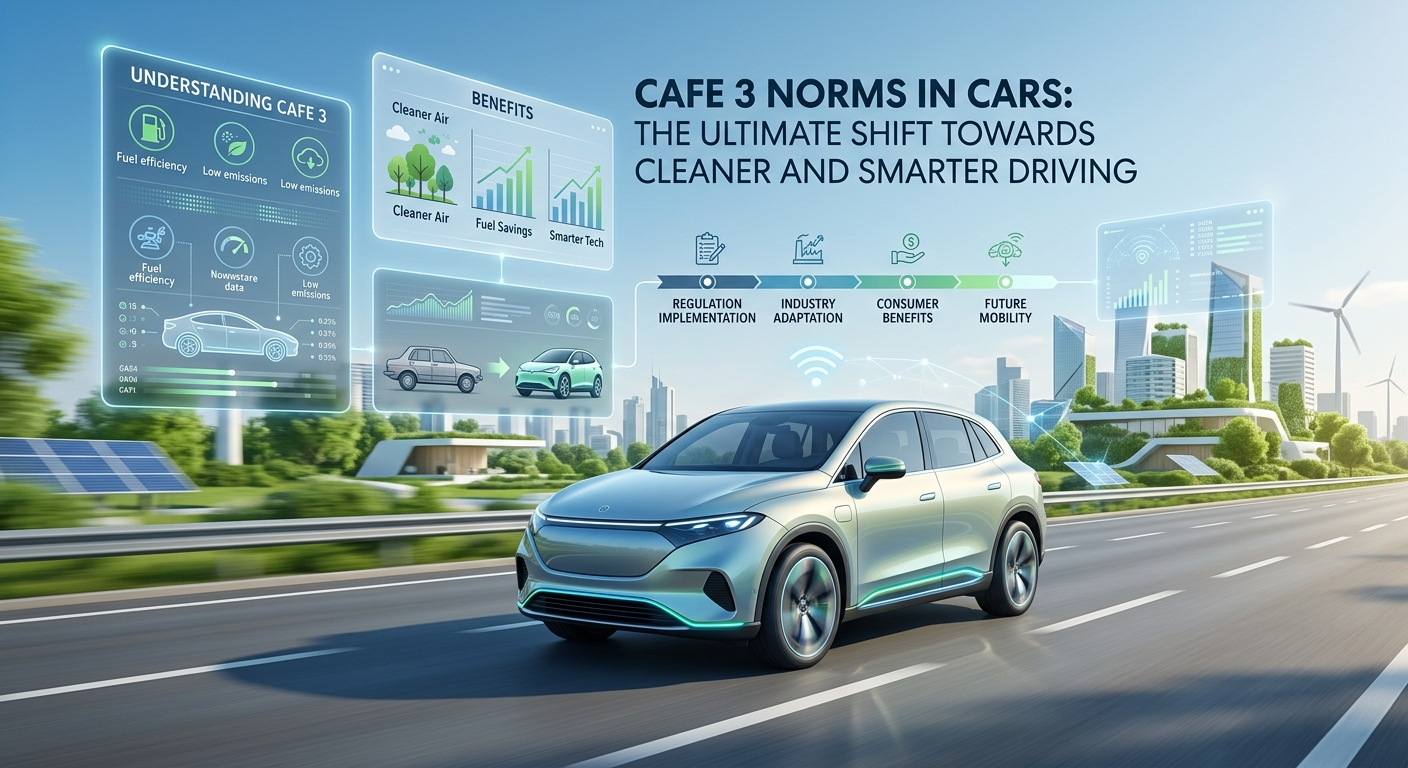
CAFE 3 Norms in Cars are about to shake up the Indian automobile industry like a double espresso shot on a Monday morning.
If you thought emission rules were already strict, buckle up—because Corporate Average Fuel Efficiency (CAFE) Phase 3 is coming in hot. These norms are designed to make cars more fuel-efficient, reduce emissions, and push automakers toward electrification.
In simpler terms:
- Less fuel, more efficiency
- Cleaner air, happier lungs
- And yes… possibly pricier cars
Let’s break it all down in a way that doesn’t feel like reading a government PDF.
What Are CAFE 3 Norms in Cars
CAFE (Corporate Average Fuel Efficiency) norms set targets for how fuel-efficient a manufacturer’s fleet must be.
- CAFE 1: Introduced in 2017
- CAFE 2: Implemented in 2022
- CAFE 3: Expected around 2027
Under CAFE 3 Norms in Cars, manufacturers will have to achieve significantly lower CO₂ emissions per km across their entire lineup.
Think of it like this:
If a car company sells one fuel-guzzling SUV, they must balance it with ultra-efficient or electric vehicles.
Why India Needs CAFE 3 Norms
India is one of the fastest-growing automobile markets—and unfortunately, pollution levels are growing too.
According to reports from organizations like the International Energy Agency, transport emissions are a major contributor to air pollution.
CAFE 3 Norms aim to:
- Reduce oil dependency
- Cut carbon emissions
- Push EV adoption
- Align India with global climate goals
Categories Under CAFE 3 Norms in Cars
CAFE norms don’t treat all cars equally (because let’s be honest, a hatchback and a Fortuner are not the same species).
1. Passenger Vehicles
- Hatchbacks
- Sedans
- Compact SUVs
2. SUVs and Large Vehicles
- Heavier cars have slightly relaxed targets
- Still need efficiency improvements
3. Electrified Vehicles
- EVs
- Hybrids
- Plug-in hybrids
These act like “cheat codes” for manufacturers to offset emissions.
Benefits of CAFE 3 Norms in Cars
Cleaner Environment
Less CO₂ = cleaner air. Your lungs will thank you.
Better Fuel Efficiency
Cars will go further on less fuel. Mileage lovers, rejoice.
Boost to EV Industry
Brands will push electric cars harder than ever.
Companies like Tata Motors and Mahindra & Mahindra are already leading this transition.
Technological Advancements
Expect:
- Lightweight materials
- Turbocharged small engines
- Hybrid tech becoming common
When Will the Benefits Be Visible
CAFE 3 Norms in Cars are expected to kick in around 2027, but the effects will start showing earlier.
Short Term (2025–2027)
- More hybrid launches
- Engine downsizing
Mid Term (2027–2030)
- EV prices reduce
- Charging infrastructure improves
Long Term (2030+)
- Majority of cars could be electrified
- Petrol-only engines may feel outdated
Most Beneficial Cars Under CAFE 3 Norms in Cars
Some cars and segments will benefit more than others.
1. Electric Vehicles
Examples:
- Tata Nexon EV
- Mahindra XUV400
These cars help manufacturers balance emissions easily.
2. Hybrid Cars
- Strong hybrids will dominate
- Great balance of performance + efficiency
3. Small Turbo Petrol Cars
- 1.0L and 1.2L turbo engines will become common
Basically, the era of “big engine, big thirst” is fading.
Threats to the Industry
Not everything is sunshine and electric rainbows.
Higher Costs for Manufacturers
Developing new tech isn’t cheap.
Impact on ICE Vehicles
Traditional petrol/diesel engines may get phased out faster.
SUV Segment Pressure
Big SUVs might:
- Become expensive
- Get smaller engines
- Lose some charm (sad Fortuner noises)
Cons of CAFE 3 Norms in Cars
1. Higher Car Prices
Advanced tech = higher costs
Your dream car might cost more.
2. Limited Choices Initially
Some models might get discontinued.
3. Performance Trade-offs
Smaller engines may reduce raw power (goodbye, V8 dreams… for now).
4. Infrastructure Challenges
EV charging is still growing in India.
Future Cars and Launches Impacted
CAFE 3 Norms in Cars will heavily influence upcoming launches.
Expected Trends
- More EVs from Maruti Suzuki
- Hybrid push from Toyota
- Premium EVs from Hyundai and Kia
Upcoming Focus Areas
- Affordable EVs under ₹10 lakh
- Long-range batteries
- Faster charging
Verdict: Should You Be Worried or Excited?
CAFE 3 Norms in Cars are like that strict gym trainer—annoying at first, but ultimately good for you.
The Good
- Cleaner environment
- Better mileage
- Future-ready technology
The Not-So-Good
- Higher costs
- Fewer ICE options
- Transition phase confusion
Final Thoughts
The CAFE 3 Norms in Cars are not just regulations—they’re a turning point.
India is moving toward a future where:
- Efficiency matters more than brute power
- Electric is the new normal
- And car companies must innovate or get left behind
So whether you’re a petrolhead or an EV enthusiast, one thing is clear:
The future of cars in India is about to get a lot more efficient—and a little less noisy.
External Resources
- Learn more about fuel efficiency standards from
International Energy Agency: https://www.iea.org - भारत सरकार का आधिकारिक ऑटो पॉलिसी पोर्टल:
https://morth.nic.in