GST 2.0 Reform in Cars is shaping up to be one of the biggest potential shake-ups in India’s automobile taxation system since GST was first introduced in 2017. And no, this isn’t just another “policy update” that makes your eyes glaze over—this one might actually make cars cheaper. Yes, cheaper. Take a moment to process that.
The idea behind GST 2.0 is simple: streamline tax slabs, reduce complexity, and boost demand, especially as the auto sector navigates electrification, stricter emission norms, and rising costs.
Think of it like upgrading from a cluttered Android phone with 200 apps to a clean, optimized one—you still get the same features, just smoother and faster.
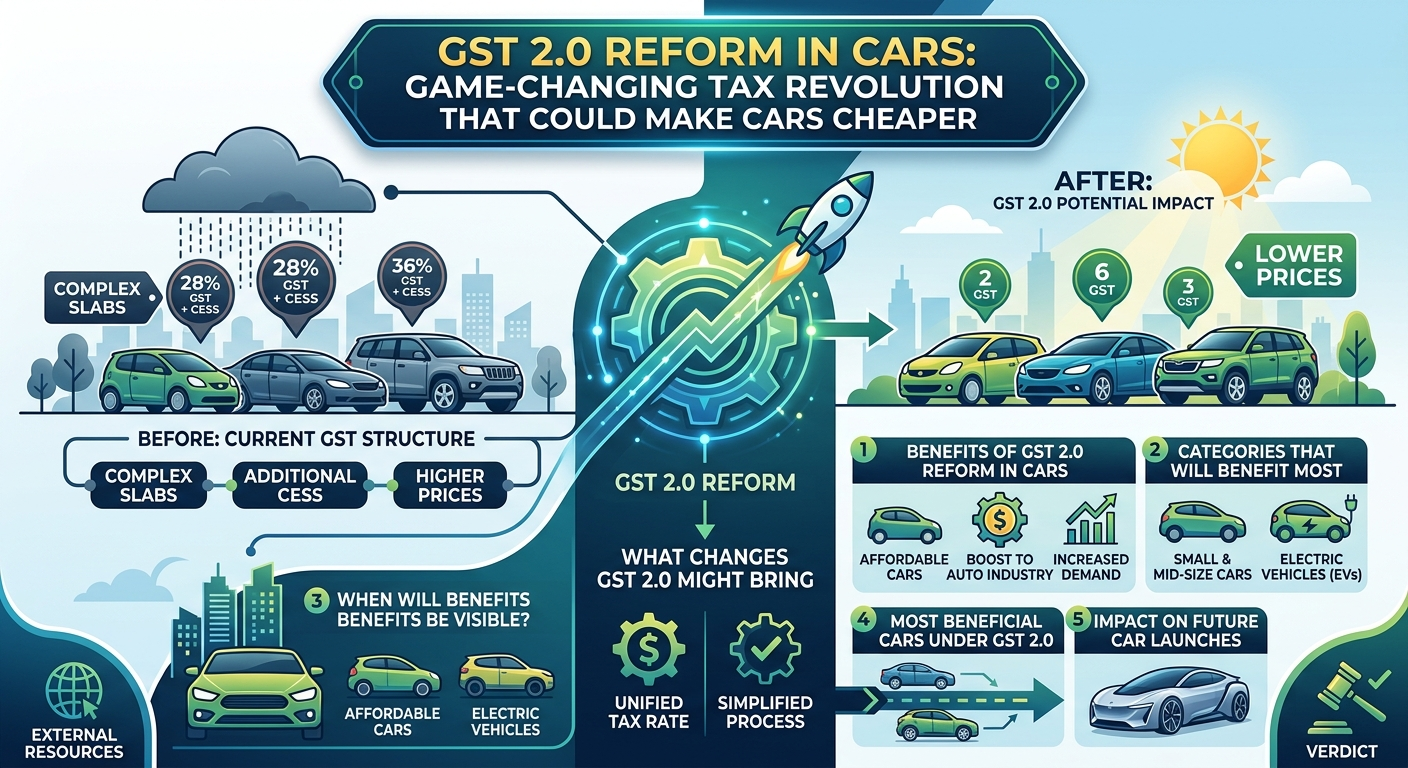
Current GST Structure on Cars (The Not-So-Fun Part)
Before we jump into the future, let’s understand the current mess.
Right now, cars in India attract:
- GST: 28%
- Cess: 1% to 22% depending on size, engine, and type
This means:
- Small cars → ~29% tax
- SUVs → up to 50%+ effective tax
Yes, buying a big SUV sometimes feels like you’re sponsoring the government’s tea fund.
GST 2.0 Reform in Cars: What Could Change?
The proposed GST 2.0 Reform in Cars is expected to:
- Reduce overall tax burden
- Simplify tax slabs
- Encourage EV adoption
- Boost domestic manufacturing
Likely Changes:
- Fewer tax slabs (maybe 3 instead of many)
- Reduced cess or elimination in some categories
- Incentives for hybrid and EV vehicles
- Better clarity for manufacturers
In short: less confusion, more savings.
Benefits of GST 2.0 Reform in Cars
1. Lower Car Prices
This is the headline benefit.
- SUVs and premium cars could see price drops of ₹50,000 to ₹3 lakh
- Entry-level cars may also get marginally cheaper
Finally, your dream car might stop being just a wallpaper.
2. Boost in Car Sales
Lower prices = higher demand.
- More first-time buyers enter the market
- Rural penetration improves
- Used car market stabilizes
3. Push for Electric Vehicles
EVs already enjoy 5% GST, but GST 2.0 could:
- Further incentivize EV buyers
- Promote local EV manufacturing
4. Simplified Tax Structure
No more confusing tax brackets based on:
- Engine size
- Length
- Fuel type
Dealers and buyers both get clarity.
5. Better Industry Growth
Automakers benefit from:
- Predictable taxation
- Improved margins
- Increased production
Categories That Benefit the Most
Not all cars will benefit equally. Some will hit the jackpot.
Big Winners
- SUVs (currently taxed heavily)
- Sedans (slowly dying segment—this might revive them)
- Hybrids (expected policy push)
Moderate Winners
- Hatchbacks
- Compact SUVs
Already Winning (But Still Safe)
- Electric Vehicles
When Will GST 2.0 Benefits Appear?
Here’s the realistic part—don’t expect miracles overnight.
- Discussions happend in GST Council meetings (2025–2026)
- Implementation likely late 2026 or early 2027
- Price changes will depend on manufacturer strategies
So yes, patience is required. But good things take time—like waiting for your Swiggy order that says “arriving in 5 minutes” for 20 minutes.
Most Beneficial Cars Under GST 2.0 Reform in Cars
If GST 2.0 becomes reality, these types of cars could benefit the most:
SUV Segment
- Full-size SUVs
- Ladder-frame vehicles
These currently suffer the highest tax burden.
Hybrid Cars
- Strong hybrids could become more attractive
- Likely to bridge gap between ICE and EVs
Premium Sedans
- Could see a comeback
- Price reduction may revive demand
Entry-Level Cars
- Small price cuts
- Increased affordability for first-time buyers
Impact on Future Car Launches
GST 2.0 Reform in Cars could influence automakers heavily.
1. More Hybrid Models
Manufacturers may push hybrids if tax benefits improve.
2. Aggressive SUV Pricing
SUVs could become even more dominant (as if they weren’t already everywhere).
3. EV Expansion
- More affordable EV launches
- Better competition
4. Localization Push
Government may tie tax benefits to “Make in India” initiatives.
External Resources
- Learn more about GST structure:
https://www.gst.gov.in - Automobile industry insights:
https://www.autocarindia.com - EV policy updates:
https://www.niti.gov.in
Verdict: Should You Wait for GST 2.0 Reform in Cars?
Here’s the honest take.
If you’re planning to buy a car right now, don’t put your life on hold waiting for GST 2.0. Policies take time, and there’s no guarantee of immediate massive price drops.
But if you’re flexible and planning a purchase 1–2 years down the line, GST 2.0 Reform in Cars could:
- Save you money
- Offer better options
- Bring more value for your budget
In simple terms:
- Urgent need → Buy now
- Flexible timeline → Wait and watch
Final Thoughts
The GST 2.0 Reform in Cars has the potential to reshape India’s automotive landscape. From making SUVs more accessible to pushing EV adoption, this reform could be the upgrade the industry desperately needs.
And who knows—your dream car might finally stop being “out of budget” and start being “booked.”
Because if GST 2.0 delivers, the only thing dropping faster than prices will be excuses.