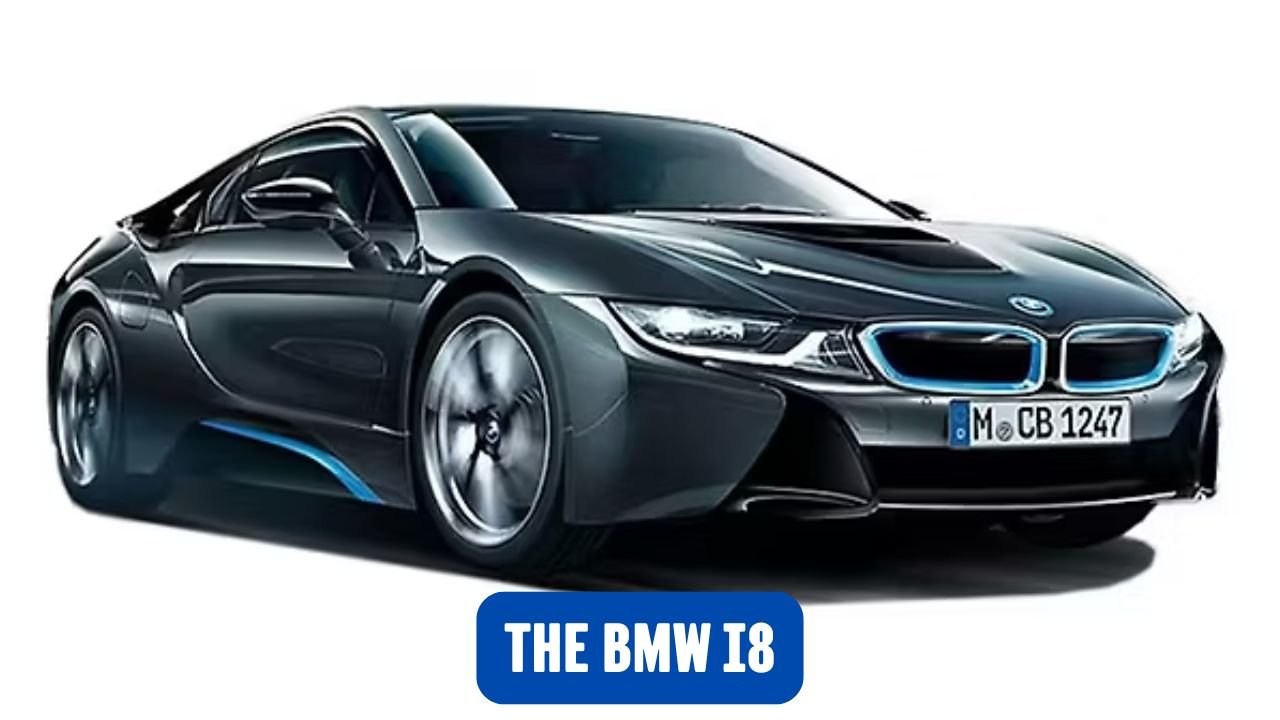
The BMW i8 electric car is one of those rare machines that makes you pause mid-sentence. You could be talking about fuel prices, office deadlines, or life in general—but the moment an i8 glides past, everything else feels… slightly less important.
It’s strange, honestly. Because in 2026, we’re surrounded by faster electric cars, smarter software, and longer ranges. Yet the i8 still manages to steal the spotlight like it never got the memo that time has moved on.
Maybe that’s the thing about certain cars—they don’t age, they just become context. And the BMW i8 is exactly that: a reminder of when the future was still being figured out.
What the BMW i8 Electric Car Really Is
Let’s clear one thing up before we go further—the BMW i8 electric car is not a full EV. And weirdly, that’s part of its charm.
Underneath that spaceship-like body, you’ll find:
- A 1.5-litre 3-cylinder turbo petrol engine
- An electric motor powering the front wheels
- A plug-in hybrid battery (11.6 kWh in later models)
This creates a split personality:
- Calm, quiet, almost polite in electric mode
- Sharp, responsive, slightly aggressive in sport mode
It’s like the car has two moods—and both show up depending on how you drive.
And unlike modern EVs that try to be perfect, the i8 feels… human. Slightly flawed, but full of character.
Price of BMW i8 Electric Car in India (2026)
If you’re expecting to walk into a showroom and book one, that ship sailed years ago.
When it was new:
- ₹2.14 crore to ₹2.62 crore (depending on spec and year)
In 2026 (used market):
- ₹75 lakh – ₹1.2 crore
Now here’s where it gets interesting—the i8 has stopped behaving like a depreciating luxury car. Instead, it’s slowly entering that “modern classic” phase.
Low-mileage, well-maintained examples?
They’re holding value like a stubborn stock that refuses to crash.
And honestly, that says more about the car than any spec sheet ever could.
Design That Refuses to Age
Some cars look good.
Some cars look expensive.
And then there are cars like the i8… that look like they don’t belong to this timeline.
What still stands out:
- Butterfly doors that turn every parking lot into a stage
- Aerodynamic channels that aren’t just for show
- A stance so low and wide it almost feels unreal
Even today, people don’t just look at it—they react to it.
You’ll notice heads turning. Phones coming out. Conversations pausing.
It’s not subtle. It never tried to be.
Image SEO Recommendation
Alt text:
“Front view of a white BMW i8 hybrid with butterfly doors open in a modern city street at sunset”
Mileage, Range & Real-Life Usage
This is where things get grounded.
Claimed figures:
- Electric range: 50–55 km
- Mileage: ~47 km/l
Reality in 2026:
- Electric range: 35–45 km
- Real-world efficiency: 20–25 km/l
Battery aging is real. Traffic is worse. Roads are unpredictable.
But here’s the twist—the i8 still manages to be surprisingly usable.
Short city drives? Mostly electric.
Long highway runs? Hybrid kicks in seamlessly.
It doesn’t demand lifestyle changes the way full EVs sometimes do.
It adapts instead.
Performance: Numbers vs Feeling
On paper, the numbers are solid:
- 369 hp (LCI models)
- 0–100 km/h in 4.4 seconds
- Top speed: 250 km/h
But numbers don’t tell you how it feels.
In electric mode, it’s quiet—almost too quiet.
In sport mode, the engine wakes up, the exhaust note gets sharper, and suddenly the car feels alive.
Not violent. Not intimidating. Just… engaging.
It’s not the fastest thing on the road anymore.
But it might be one of the most interesting.
The Engineering Story Nobody Talks About
This is where things get nerdy—in a good way.
The BMW i8 electric car uses a dual transmission system:
- Petrol engine → 6-speed automatic (rear wheels)
- Electric motor → 2-speed gearbox (front wheels)
Two systems. Two axles. One brain trying to make it all feel seamless.
And surprisingly—it works.
The Carbon Fiber Advantage
BMW didn’t stop at hybrid tech. They went further.
The i8 uses a carbon-fiber reinforced passenger cell, part of its LifeDrive architecture.
Why this matters:
- Keeps weight low
- Improves rigidity
- Balances out battery mass
Without this, the car would feel heavy.
With it, the i8 feels light on its feet—almost deceptive for a hybrid.
Ground Clearance Reality (India)
- Around 117 mm
Sounds risky. But thanks to the short wheelbase, it handles speed breakers better than you’d expect.
Still, you’ll slow down.
Not because you have to—but because you’ll want to.
Interior Experience & Daily Use
Step inside, and something feels different.
No oversized screens.
No overwhelming tech layers.
Just a clean, driver-focused cockpit.
Features include:
- Digital instrument cluster
- Heads-up display
- Premium Harman Kardon audio
- Drive modes (Eco Pro, Comfort, Sport)
It doesn’t try to impress you with quantity.
It wins you over with clarity.
And honestly, that’s refreshing in 2026.
BMW i8 Electric Car Specifications
| Specification | Details |
|---|---|
| Engine | 1.5L Turbo Petrol |
| Electric Motor | Yes |
| Battery | 11.6 kWh |
| Power Output | 369 hp |
| Transmission | Dual system (6-speed + 2-speed EV) |
| Drivetrain | AWD |
| 0–100 km/h | 4.4 sec |
| Electric Range | ~50 km (claimed) |
| Ground Clearance | ~117 mm |
Ownership Reality: The Part Nobody Brags About
Let’s be honest—owning a BMW i8 electric car is not just about driving.
What you’ll love:
- The attention (a lot of it)
- The uniqueness
- The feeling of driving something different
What you won’t:
- Maintenance costs (they’re not friendly)
- Limited practicality
- Finding specialized service in smaller cities
It’s not a logical purchase.
And that’s exactly why people still want it.
Should You Buy the BMW i8 Electric Car in 2026?
Yes, if:
- You appreciate engineering experiments
- You want a car that stands out every single day
- You see cars as more than just transport
No, if:
- You want the latest EV tech
- You prioritize practicality
- You dislike attention
Final Thoughts
The BMW i8 electric car sits in a strange place in 2026.
It’s not outdated.
It’s not cutting-edge.
It’s something else entirely.
It represents a moment when automakers were still asking questions instead of delivering polished answers.
And maybe that’s why it still feels special.
Because in a world where everything is optimized, efficient, and predictable…
The i8 still feels like a risk someone took.
And somehow, that risk still pays off.
More Articles You Shouldn’t Miss