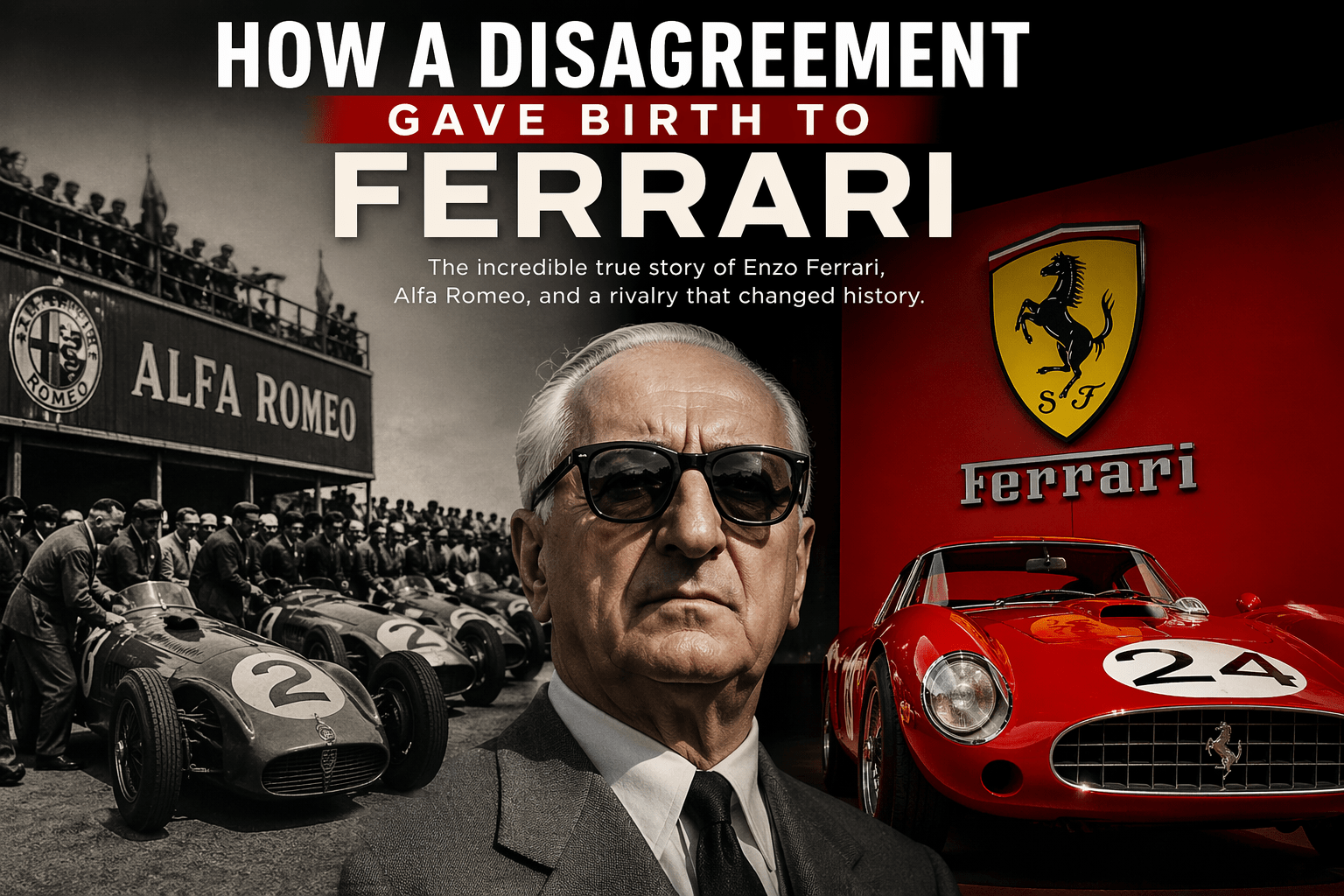
The phrase how a disagreement gave birth to Ferrari might sound poetic, but in reality, it’s rooted in corporate restructuring, bruised ego, and a relentless pursuit of independence.
At the center of it all was Enzo Ferrari—a man who valued control as much as speed. His journey from employee to icon wasn’t smooth; it was forged through conflict.
Scuderia Ferrari and Alfa Romeo Origins
Before Ferrari became synonymous with luxury and performance, it operated under the umbrella of Alfa Romeo.
- In 1929, Enzo founded Scuderia Ferrari
- It functioned as Alfa Romeo’s semi-official racing team
- Ferrari managed drivers, logistics, and race operations
This was not yet a car company—it was a racing organization built on Alfa Romeo machinery.
The 1937 Takeover and Loss of Control
Here’s where how a disagreement gave birth to Ferrari starts to take shape structurally—not emotionally.
In 1937:
- Alfa Romeo acquired 80% of Scuderia Ferrari
- The racing division was rebranded as Alfa Corse
- Enzo Ferrari was retained—but sidelined
Operational authority shifted to corporate leadership under Ugo Gobbato, dramatically reducing Ferrari’s autonomy.
For someone who built his identity on control, this wasn’t sustainable.
The 1939 Break: Where It All Changed
By September 1939, the situation reached a breaking point.
Enzo Ferrari exited Alfa Romeo after escalating disagreements over:
- Strategic direction
- Decision-making authority
- His diminished role within Alfa Corse
This is the precise moment where how a disagreement gave birth to Ferrari transitions from tension to action.
However, the departure came with a critical constraint:
The Non-Compete Clause
Ferrari was prohibited from using his own name in motorsport for four years.
Auto Avio Costruzioni 815 – Ferrari’s First Rebellion
Constraints didn’t stop Ferrari—they redirected him.
In 1940, he founded Auto Avio Costruzioni, a workaround entity that allowed him to continue engineering and competing indirectly.
The result?
Auto Avio Costruzioni 815
- Built for the 1940 Mille Miglia
- Technically not branded as a Ferrari
- Designed to bypass the non-compete clause
This car represents a critical nuance in how a disagreement gave birth to Ferrari—it shows Ferrari didn’t wait for permission to innovate.
It was, quite literally, rebellion on wheels.
1947 Ferrari 125 S – The Official Beginning
Once the restriction expired, Ferrari wasted no time.
In 1947, the first official Ferrari-badged car debuted:
Ferrari 125 S
- Powered by a V12 engine
- Built under Ferrari
- Marked the true birth of the Ferrari brand
This wasn’t just a product launch—it was a declaration of independence.
Legacy of the Alfa Romeo vs Ferrari Split
The split between Alfa Romeo and Ferrari reshaped motorsport history.
Through Scuderia Ferrari, Ferrari went on to become:
- The most iconic team in Formula One
- A symbol of engineering excellence
- A brand built on emotion and precision
Meanwhile, Alfa Romeo remained influential—but the loss of Ferrari altered its racing trajectory permanently.
Key Takeaways
- How a disagreement gave birth to Ferrari is rooted in corporate takeover, not just personal conflict
- The 1937 Alfa Corse transition was the real trigger
- The 1939 exit formalized Ferrari’s independence
- The 815 project proved Ferrari’s refusal to be constrained
- The 125 S in 1947 marked the official beginning
External Resources
- Ferrari official history: https://www.ferrari.com/en-EN/history
- Alfa Romeo heritage: https://www.alfaromeo.com/history
More Articles You Shouldn’t Miss
Renault Duster 2026 – The Comeback of the SUV That Refuses to Quit
TVS Orbiter v1: A New Electric Scooter That Could Redefine City Riding
Skoda Kushaq Facelift 2026: Bold Upgrade or Overhyped Refresh? (Full Review)
Conclusion
The story of how a disagreement gave birth to Ferrari isn’t just about conflict—it’s about control, identity, and persistence under constraint.
If Alfa Romeo had never absorbed Scuderia Ferrari…
If Enzo Ferrari had accepted a diminished role…
Ferrari might never have existed.
And that’s the paradox:
One of the greatest brands in automotive history wasn’t born from harmony—
It was born from refusal.