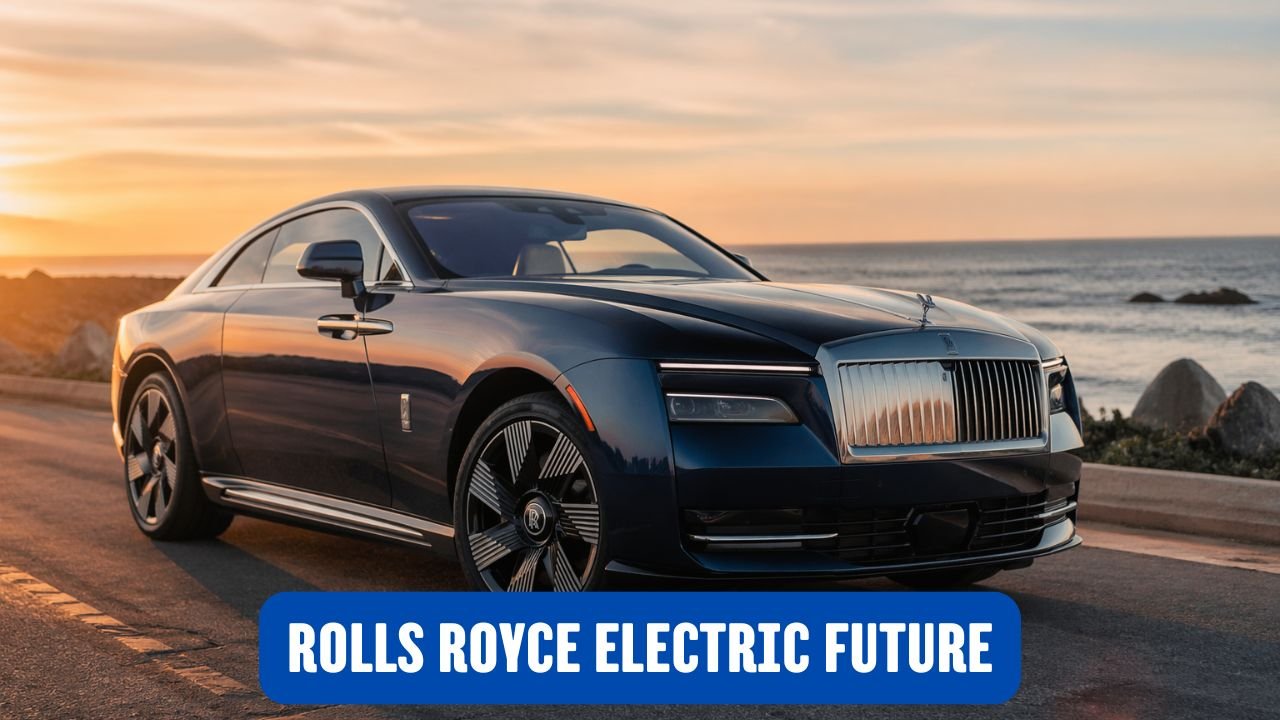
The Rolls Royce electric future doesn’t arrive with hype, loud promises, or tech-bro theatrics. It arrives the way a Rolls-Royce always has—quietly, deliberately, and with a certain confidence that doesn’t need validation.
For a company that built its reputation on near-silent engines and effortless motion, going electric feels less like disruption and more like… finally coming home.
And yet, the story in 2026 is not as simple as “electric equals inevitable.” In fact, it’s far more interesting than that.
1. The Arrival of Spectre
When Rolls-Royce Spectre was revealed, it didn’t try to shock the world. It didn’t need to.
This is Rolls-Royce’s first fully electric production car, and it behaves exactly how you’d expect—only smoother.
What matters (beyond the brochure):
- Around 520–530 km WLTP range
- 0–100 km/h in roughly 4.5 seconds
- Built on the brand’s proprietary aluminum platform
On paper, those numbers are respectable. But focusing on them misses the point entirely.
A Rolls-Royce has never been about numbers. It’s about how a car makes time feel—slower, quieter, more controlled. Spectre simply removes the last traces of mechanical noise from that experience.
Compared to something like the Tesla Model S Plaid, it’s not trying to be faster. It’s trying to be better at doing nothing at all.
And strangely, that’s much harder.
2. Why Electric Actually Suits Rolls-Royce
Here’s a thought that sounds obvious in hindsight: Rolls-Royce was always chasing what electric cars naturally deliver.
- Silence
- Smoothness
- Instant power
- No interruptions
Internal combustion engines—even the legendary V12—were, in a way, the compromise.
With backing from BMW Group, Rolls-Royce now has access to mature EV technology. But instead of rushing, they’ve taken their time refining how that technology feels.
Because in this segment, emotion beats innovation every time.
3. Engineering the Silence
If you think building a quiet car is easy, try building one where silence is the main feature.
Rolls-Royce engineers spent years tuning Spectre’s acoustic profile. Ironically, making a car too quiet can feel unnatural, so they engineered subtle sound textures—just enough to make the experience feel alive without being intrusive.
The battery and chassis integration also play a key role:
- Lower center of gravity improves ride stability
- Rigid structure enhances the “floating” sensation
- Power delivery is calibrated to feel effortless, not aggressive
They call it the “Magic Carpet Ride.” And for once, the marketing term isn’t an exaggeration.
4. Sustainability Without Compromise
The Rolls Royce electric future isn’t driven by regulations alone. It’s also about perception.
Luxury buyers today are different. They’re still interested in craftsmanship and exclusivity—but they’re also paying attention to environmental impact.
Rolls-Royce has responded by:
- Improving material sourcing practices
- Reducing emissions in production
- Designing vehicles for long-term ownership
It’s a subtle balance. No one buying a Rolls-Royce wants to feel like they’re making a sacrifice. Sustainability, in this context, has to feel like an upgrade—not a limitation.
5. The Strategy Shift: Not Fully Electric by 2030
This is where things get interesting—and where the narrative has changed.
Earlier plans suggested that Rolls-Royce would go fully electric by 2030. That is no longer the case.
Under CEO Chris Brownridge, Rolls-Royce Motor Cars has adopted a more flexible approach.
What’s changed?
- The brand is not committing to a full EV lineup by 2030
- The iconic V12 engine will continue for the foreseeable future
- Electrification will expand—but not replace everything
Why the shift happened
The ultra-luxury market doesn’t follow the same rules as mass-market cars.
- Demand for traditional engines remains strong in key regions
- Charging infrastructure still varies globally
- Buyers value heritage just as much as innovation
So instead of forcing a transition, Rolls-Royce is letting both worlds coexist.
It’s less “all-in” and more “best of both.”
6. What This Means for Future Models
For now, models like:
- Rolls-Royce Phantom
- Rolls-Royce Ghost
- Rolls-Royce Cullinan
…aren’t going anywhere.
Instead, we’re likely to see:
- Gradual introduction of electric variants
- Continued refinement of combustion models
- More personalization options across both powertrains
This dual approach gives buyers something rare in today’s market: choice without compromise.
More Articles You Shouldn’t Miss
Renault Duster 2026 – The Comeback of the SUV That Refuses to Quit
TVS Orbiter v1: A New Electric Scooter That Could Redefine City Riding
Skoda Kushaq Facelift 2026: Bold Upgrade or Overhyped Refresh? (Full Review)
Final Thoughts: A Quiet, Calculated Evolution
The Rolls Royce electric future isn’t a revolution—it’s a refinement.
There’s no urgency here, no pressure to lead headlines. Just a steady shift toward something that feels right for the brand and its customers.
In a world obsessed with speed—faster cars, faster charging, faster change—Rolls-Royce is doing the opposite.
It’s slowing down.
And somehow, that makes it feel even more advanced.
Because real luxury has never been about keeping up. It’s about deciding your own pace—and having the confidence to stick to it.