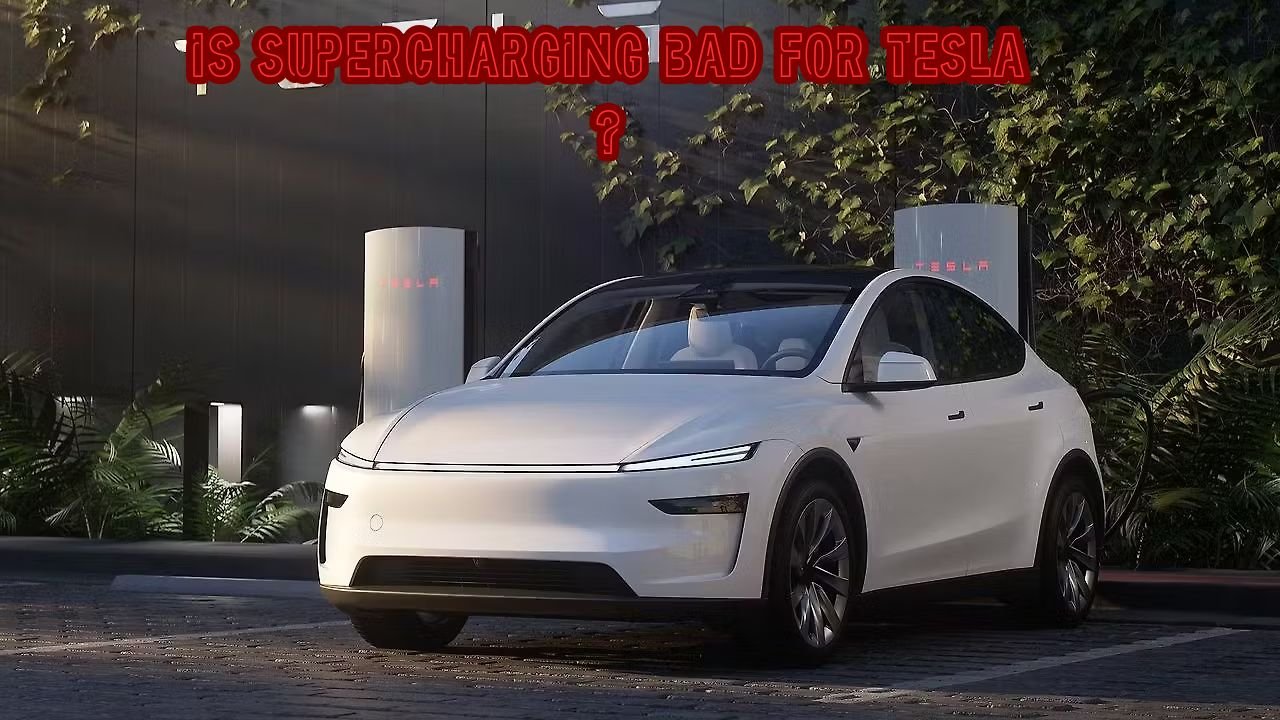
Let’s get straight to it: is supercharging bad for tesla?
If you’re imagining your Tesla battery crying every time you fast charge it — relax. It’s not that dramatic. But it’s also not completely harmless either. Think of it like eating biryani daily — amazing, fast, satisfying… but maybe not ideal every single day.
In this blog, we’ll decode everything from battery health to Indian charging realities — without the boring textbook vibes.
What is Tesla Supercharging?
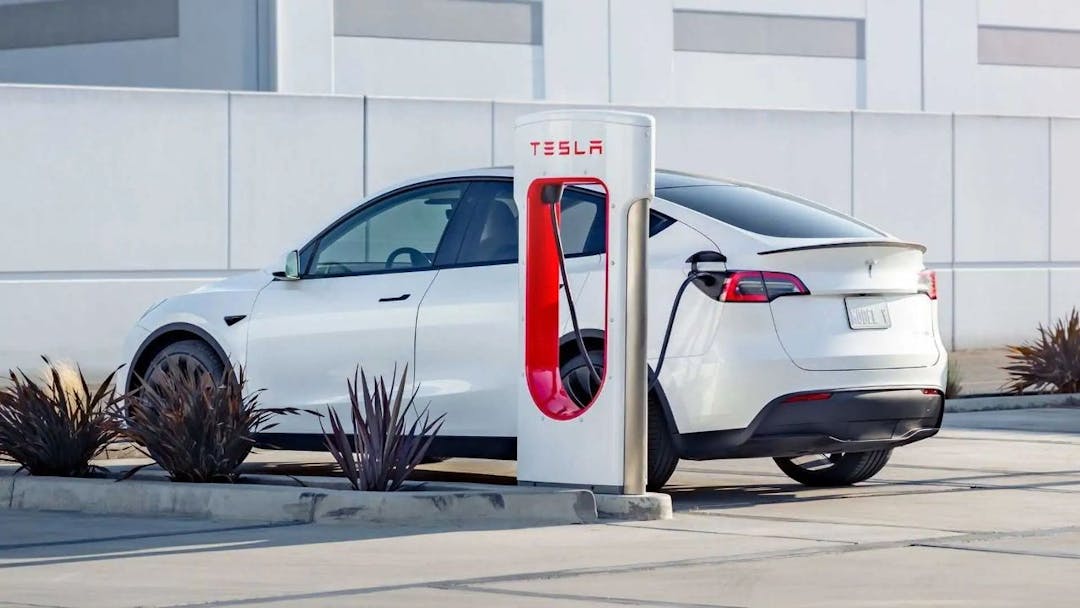
Tesla Supercharging is basically fast charging on steroids. Instead of waiting 6–8 hours at home, you can juice up your EV in around 20–40 minutes.
Tesla’s global network supports speeds up to 250 kW, which is insanely fast — faster than your phone charging, and definitely faster than Indian traffic moving on a Monday morning.
In India, though, Tesla’s official Supercharger network is still… let’s say “loading…”. Most EV users rely on third-party fast chargers like Tata Power or Statiq.
Is Supercharging Bad for Tesla Battery?
Short Answer:
No… but don’t overdo it.
Long Answer:
Fast charging generates more heat, and heat is the real villain when it comes to battery degradation.
Tesla batteries are designed to handle fast charging, but:
- Frequent supercharging = slightly faster degradation
- Occasional supercharging = perfectly fine
According to real-world data and EV studies, Tesla batteries lose about 10–15% capacity after 200,000+ km, even with regular fast charging. That’s still better than most petrol engines surviving Indian potholes.
Battery Design & Engineering
Tesla uses advanced Lithium-ion battery packs with:
- Liquid cooling systems
- Battery Management System (BMS)
- Thermal regulation
This means your car actively prevents overheating — basically like your mom telling you “bas karo phone charging”.
The system slows charging when needed, protecting long-term health.
Performance & Power Figures
Let’s talk numbers — because EVs aren’t just about saving the planet, they’re also secretly fast
- Charging speed: Up to 250 kW
- 0–80% charge: ~25 minutes (ideal conditions)
- Range added: ~250 km in 15 minutes
Models like the Tesla Model 3 and Tesla Model Y deliver insane acceleration — and supercharging keeps them road-trip ready.
Range Impact: Myth vs Reality
Does supercharging reduce range permanently?
Not exactly.
- Short term: No noticeable impact
- Long term (heavy use): Slight capacity drop
But here’s the thing — most drivers won’t even notice it.
Even after years, your Tesla might still give 400+ km range. That’s more than enough for Delhi to Jaipur runs (with a chai break, obviously).
Charging Cost in India
Here’s where reality hits.
Since Tesla isn’t officially widespread in India yet:
- Fast charging costs: ₹15–₹25 per unit
- Full charge cost: ₹800–₹1500 (approx)
Still cheaper than petrol, but not “free electricity from the sun” cheap.
Features That Protect Tesla Batteries
Tesla isn’t dumb. It knows you’ll abuse fast charging sometimes
So it includes:
- Smart charging curve (slows near 80%)
- Thermal management
- Software updates improving battery life
Your car is basically babysitting its own battery.
Who Should Use Supercharging?
Supercharging makes sense if:
- You travel frequently on highways
- You don’t have home charging
- You need quick top-ups
Basically, it’s perfect for Indian road trippers and “last-minute planners”.
Who Should Avoid Frequent Supercharging?
Maybe avoid relying on it if:
- You have home charging access
- You drive mostly in the city
- You want maximum battery lifespan
Home charging = slow, steady, and healthy. Like ghar ka khana.
Tesla Models & Charging Compatibility
Popular Tesla models:
- Tesla Model S
- Tesla Model 3
- Tesla Model X
- Tesla Model Y
All support fast charging, but actual speeds depend on charger availability — which is still evolving in India.
Is Tesla Practical for India?
Let’s be honest.
Tesla in India (as of 2026):
- Limited infrastructure
- High import costs
- No official large-scale rollout yet
But things are changing. Tesla has been in talks with the Indian government and could enter the market soon with local manufacturing.
Future of Supercharging in India
India’s EV ecosystem is growing fast:
- More fast chargers on highways
- Government EV policies improving
- Private players expanding networks
If Tesla enters properly, expect:
- Dedicated Supercharger network
- Faster adoption
- Lower costs
Basically, the EV future in India is “buffering… but almost loaded.”
More Articles You Shouldn’t Miss
- TVS Orbiter v1: A New Electric Scooter That Could Redefine City Ridin
- Skoda Kushaq Facelift 2026: Bold Upgrade or Overhyped Refresh? (Full Review)
- Renault Duster 2026 – The Comeback of the SUV That Refuses to Quit
Verdict
So, is supercharging bad for tesla?
Not really.
But don’t make it a daily habit.
Use it when needed, avoid overuse, and your Tesla battery will live a long, happy life — longer than most gym memberships.
Final thought:
Supercharging is like instant noodles — super convenient, totally fine occasionally, but not something you want three times a day.
The information provided on this website is for informational purposes only.