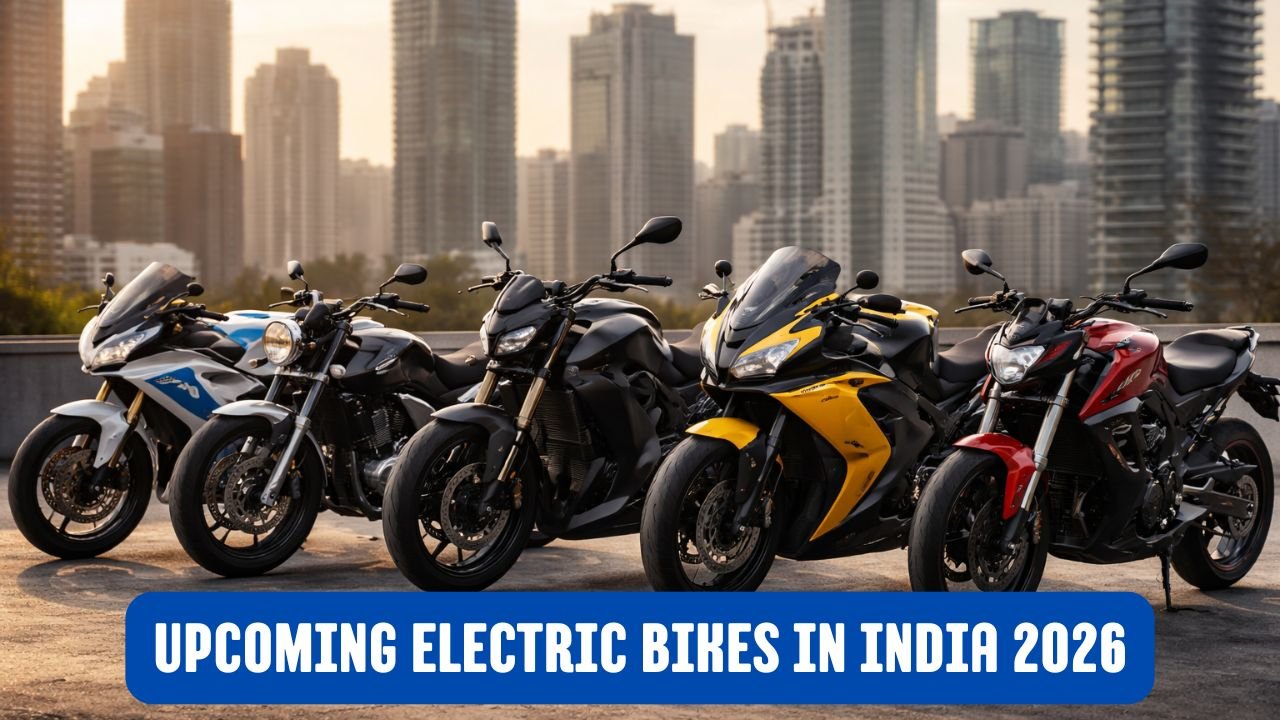
A few years ago, electric bikes in India felt like those “coming soon” boards outside malls that never really opened. You’d hear about them, see flashy renders, maybe watch a YouTube review—and then… nothing.
But in 2026, something has shifted.
Now when people talk about upcoming electric bikes in India, it’s no longer just curiosity. It’s practical. It’s personal. It’s the office colleague calculating fuel savings, the college student comparing charging time with lecture hours, the delivery rider wondering if this switch could actually make life easier.
And somewhere in all of this, there’s a quiet realization:
this isn’t the future anymore—it’s slowly becoming the default.
Why Everyone Is Talking About Upcoming Electric Bikes in India
Let’s be honest. Most revolutions don’t start with ideology. They start with inconvenience.
Petrol prices have a way of reminding you that loyalty to internal combustion engines is expensive. Every refill feels like a small negotiation with your wallet.
Electric bikes step in with a simple promise:
“What if your daily commute didn’t depend on fuel prices?”
That idea alone is powerful enough to shift behavior.
But there’s more happening beneath the surface:
- Cities are getting tighter, traffic heavier
- Running costs are becoming more important than purchase price
- Younger buyers are more open to trying something new
Still, enthusiasm comes with confusion. Because for every genuine launch, there are three exaggerated claims floating around online.
The Gap Between Hype and Reality
If you’ve spent even 10 minutes researching EV bikes online, you’ve probably seen headlines like:
- “300 km range!”
- “0–100 in seconds!”
- “Revolutionary battery tech!”
And it all sounds exciting—until you ask one simple question:
“When can I actually buy this?”
That’s where things get blurry.
Some bikes are:
- Still prototypes
- Limited to showcases
- Or quietly delayed without updates
It doesn’t mean companies are lying. It just means timelines in the EV world are… flexible.
A good rule of thumb:
The more dramatic the claim, the more patient you need to be.
Upcoming Electric Bikes in India You Can Actually Expect
Let’s move past speculation and talk about machines that have some level of credibility behind them.
Ola Roadster Series
The Ola Roadster lineup has generated the kind of attention most brands would envy. But attention and execution are two very different things.
What makes this interesting is not just the product—but the ambition behind it.
What seems realistic:
- A usable range somewhere around 140–180 km in everyday conditions
- Strong focus on software—apps, connectivity, riding modes
- Pricing designed to undercut competitors
There’s a certain confidence in how Ola presents its products. Whether that confidence translates into consistency—that’s something buyers are watching closely.
Electric Project by Royal Enfield
This one feels different.
While startups rush to announce, Royal Enfield is taking a quieter route. No aggressive promises, no exaggerated specs—just slow, deliberate development.
And oddly enough, that restraint builds more trust.
What’s known:
- An electric motorcycle is under development
- The brand wants to retain its classic identity
What’s unknown:
- Almost everything else
But here’s the interesting part:
People aren’t excited because of the specs. They’re curious because of what it represents—a legacy brand stepping into a completely new era.
Ultraviolette Automotive F99
The F99 looks like something designed for a racetrack, not a city road—and that’s exactly what it is.
It’s important to understand this clearly:
This is not a commuter bike. It’s a demonstration of capability.
It shows what electric performance can achieve when constraints like cost and practicality are removed.
So if you’re expecting to buy this next year, you might be disappointed.
But if you’re looking at it as a glimpse into the future, it’s fascinating.
Developments from Tork Motors
Tork isn’t trying to dominate headlines—and maybe that’s why it deserves attention.
Its approach feels grounded:
- Improve what already exists
- Focus on rideability
- Keep pricing sensible
Sometimes progress isn’t about leaps. It’s about steady steps that actually reach somewhere.
Expansion Plans by Oben Electric
Oben’s strategy seems centered around practicality.
Instead of chasing extremes, it focuses on:
- Strong acceleration for city riding
- Manageable pricing
- Real-world usability
It’s the kind of product that doesn’t trend—but quietly finds buyers.
Updates from Revolt Motors
Revolt has already done something many others haven’t: delivered bikes at scale.
Now the focus is refinement.
Expect:
- Better battery performance
- Incremental improvements
- More reliability
Not exciting on paper—but very relevant in real life.
What Most Buyers Get Wrong About Electric Bikes
There’s a small disconnect between expectation and experience.
Range Anxiety vs Real Usage
Most people think they need 200+ km range.
In reality, daily usage is often under 40 km.
Charging Fear
Charging sounds complicated—until you realize it’s mostly done at home, overnight, like charging a phone.
Performance Doubts
Electric bikes are often quicker off the line than petrol bikes. Silence doesn’t mean slow
Pricing, Subsidies, and Ownership Truths
External resource https://www.india.gov.in
Let’s talk numbers—because eventually, that’s what decisions come down to.
- Entry-level electric bikes: around ₹1 lakh
- Mid-range: ₹1.5–2 lakh
- Premium: ₹2–3.5 lakh
Yes, the upfront cost can feel high.
But ownership is a different story:
- Lower running cost
- Minimal maintenance
- Fewer moving parts
There’s a quiet satisfaction in riding something that doesn’t constantly demand attention—or fuel.
Charging Infrastructure: The Everyday Experience
External resource https://e-amrit.niti.gov.in
The reality is mixed.
In cities, you’ll find:
- Public charging points increasing
- Residential charging setups becoming common
Outside cities, it’s still evolving.
But here’s what most people discover:
If you can charge at home, you’re already 80% sorted.
The remaining 20%—long rides, emergencies—still needs planning.
Should You Buy Now or Wait?
This question doesn’t have a universal answer.
Buy now if:
- Your commute is predictable
- You want immediate savings
- You’re comfortable adapting
Wait if:
- You’re expecting major breakthroughs soon
- You want more options
- You prefer a mature ecosystem
But here’s something worth thinking about:
Waiting for perfect technology is a bit like waiting for the perfect moment in life.
It sounds sensible—but it often means you never start.
More Articles You Shouldn’t Miss
- TVS Orbiter v1: A New Electric Scooter That Could Redefine City Riding
- Skoda Kushaq Facelift 2026: Bold Upgrade or Overhyped Refresh? (Full Review)
- Renault Duster 2026 – The Comeback of the SUV That Refuses to Quit
Final Thoughts on Upcoming Electric Bikes in India
The journey of upcoming electric bikes in India isn’t dramatic. It’s gradual. Almost subtle.
There’s no single moment where everything changes. Instead, it’s a series of small shifts:
- One more charging station appears
- One more person switches from petrol
- One more company improves its product
And slowly, the balance tips.
One day, you’ll notice that the loudest bike at a signal feels out of place—not the quiet one.
That’s when you realize the transition is already happening.
Not loudly. Not aggressively.
Just steadily.
And maybe that’s the most interesting part of all—
the future didn’t arrive with a roar.
It arrived quietly… and stayed.