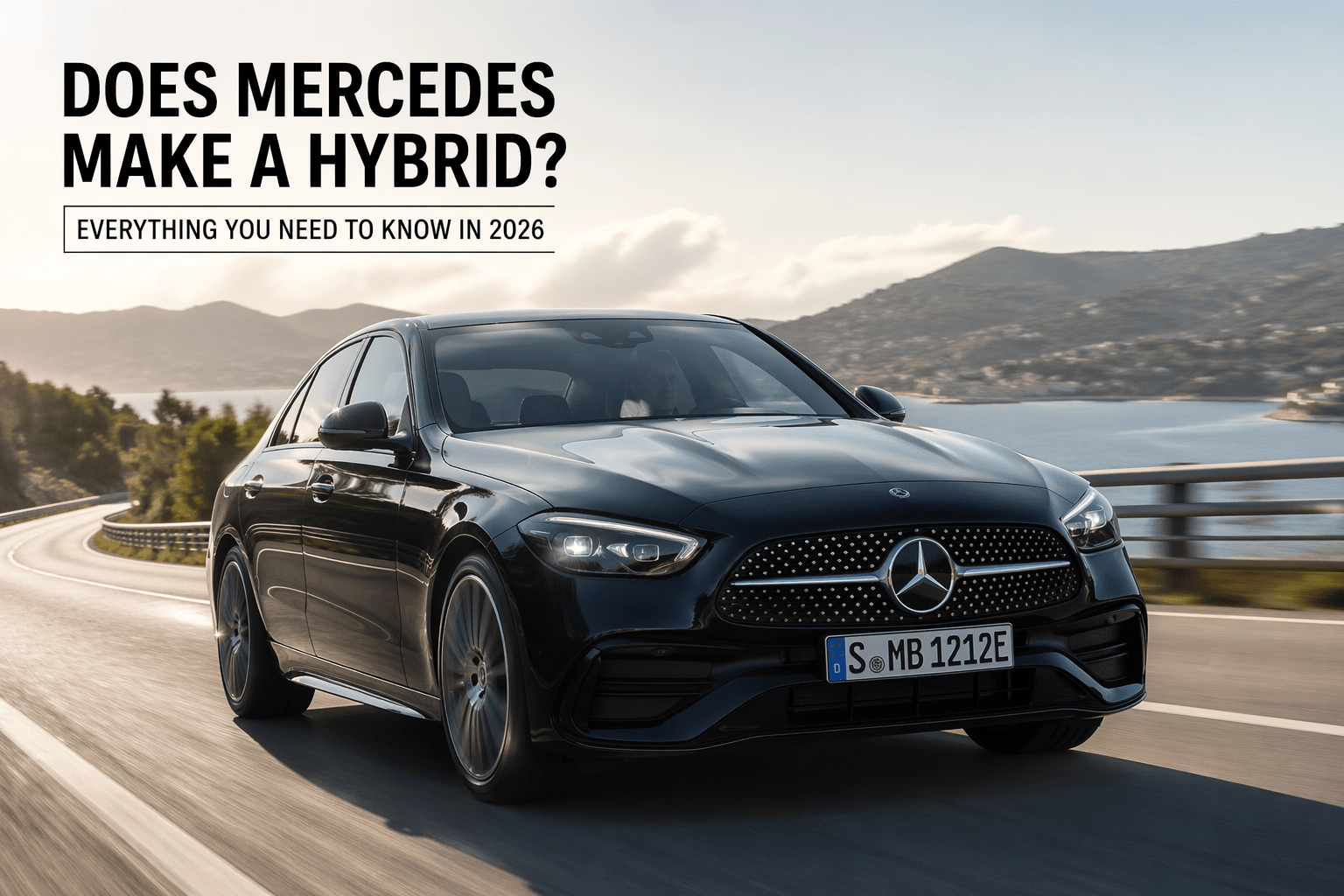
Does Mercedes make a hybrid? Yes—and in 2026, they’re doing it with far more precision than before.
Mercedes-Benz has refined its hybrid approach into something more focused: plug-in hybrids (PHEVs) that deliver meaningful electric driving, rather than just incremental efficiency gains.
But here’s the nuance:
Mercedes is simultaneously pushing full EVs hard, meaning hybrids are now a strategic bridge—not the final destination.
Does Mercedes Make a Hybrid in 2026? (H2)
Yes, Mercedes continues to offer plug-in hybrids and mild hybrids across key segments, including:
- Luxury sedans
- Mid-size and full-size SUVs
- Performance AMG models
However, unlike earlier years, the hybrid lineup is now more selective and purpose-driven, focusing on high-impact models rather than broad coverage.
Mercedes Hybrid Strategy Explained (H2)
1. Mild Hybrids (Still Present, Still Subtle)
Mercedes continues to use 48V mild hybrid systems in many petrol and diesel models.
- No external charging
- Supports engine during acceleration
- Improves efficiency slightly
This system is evolutionary, not revolutionary.
2. Plug-in Hybrids (Core Focus in 2026)
This is where Mercedes is investing heavily.
- Larger batteries than before
- Real electric-only driving capability
- Seamless switch between electric and combustion
Important update:
Mercedes is moving away from “EQ Power” branding, and hybrids are now integrated into standard model naming (e.g., “450e”, “580e”).
3. AMG E Performance Hybrids (High-Tech Performance)
Mercedes-AMG hybrids remain a standout.
- Rear-axle electric motor (P3 configuration)
- Formula 1-inspired energy deployment
- Instant torque + high output
Efficiency meets controlled chaos—in a good way.
Popular Mercedes Hybrid Models (Updated 2026)
Let’s focus on what actually matters in 2026, not legacy mentions.
1. Mercedes-Benz GLE 450e (Plug-in Hybrid SUV)
One of the most important hybrids today.
- Practical luxury SUV
- Strong electric driving capability
- Ideal for families transitioning to electrification
2. Mercedes-Benz S 580e (Flagship Hybrid Sedan)
This is where hybrid tech meets peak luxury.
- Ultra-quiet electric mode
- Long electric range for daily driving
- Combines V6 power with electric refinement
3. Mercedes-AMG C 63 S E Performance
A controversial but fascinating hybrid.
- Downsized engine + electric boost
- Extreme performance focus
- Redefines what AMG stands for
Important Update: What About the C-Class Hybrid?
Here’s where things changed.
The traditional plug-in hybrid C-Class (C 300e) is no longer the centerpiece. Instead, Mercedes is shifting attention toward a new fully electric C-Class platform, signaling a broader transition toward EV dominance.
This doesn’t mean hybrids are gone—it means they’re being strategically repositioned.
Electric Range: WLTP vs EPA Reality
This is where most articles get it wrong—so let’s be precise.
Typical Plug-in Hybrid Range (2026)
- WLTP (Europe): ~80 km (optimistic testing cycle)
- EPA (US): ~45–50 miles (≈72–80 km realistic range)
Examples:
- GLE 450e → ~49 miles (EPA)
- S 580e → ~47–48 miles (EPA)
What This Means in Real Life
- City commuting → mostly electric
- Short trips → zero fuel usage
- Highway driving → hybrid mode dominates
In simple terms:
You can treat it like an EV during the week, and a petrol car on road trips.
Performance & Driving Experience
Mercedes hybrids don’t feel like compromises—they feel intentional.
- Smooth acceleration (electric torque fills gaps)
- Silent cabin in EV mode
- Seamless transitions between power sources
And in AMG variants?
It’s less “eco-friendly” and more “physics-defying.”
Are Mercedes Hybrids Worth It?
Worth it if:
- You drive daily in urban conditions
- You can charge regularly
- You want luxury with reduced fuel usage
Not ideal if:
- You never plug in
- You expect a full EV experience
- You primarily drive long-distance highways
Pros and Cons
Pros
- Genuine electric driving capability
- Premium comfort and build quality
- Reduced fuel consumption in daily use
- Strong tech integration
Cons
- Higher upfront cost
- Heavier than pure petrol models
- Requires charging discipline for full benefit
Helpful External Resources
More Articles You Shouldn’t Miss
Renault Duster 2026 – The Comeback of the SUV That Refuses to Quit
TVS Orbiter v1: A New Electric Scooter That Could Redefine City Riding
Skoda Kushaq Facelift 2026: Bold Upgrade or Overhyped Refresh? (Full Review)
Final Verdict: Does Mercedes Make a Hybrid?
Yes—but in 2026, the better question is:
Why does Mercedes still make hybrids?
Because they solve a very real problem:
not everyone is ready to go fully electric.
Mercedes hybrids are no longer experimental—they are refined transition tools, offering a practical middle ground between combustion and full electrification.
And if the automotive future is electric, hybrids are the quiet, competent translators helping us get there—without losing comfort, performance, or a bit of that signature Mercedes charm.