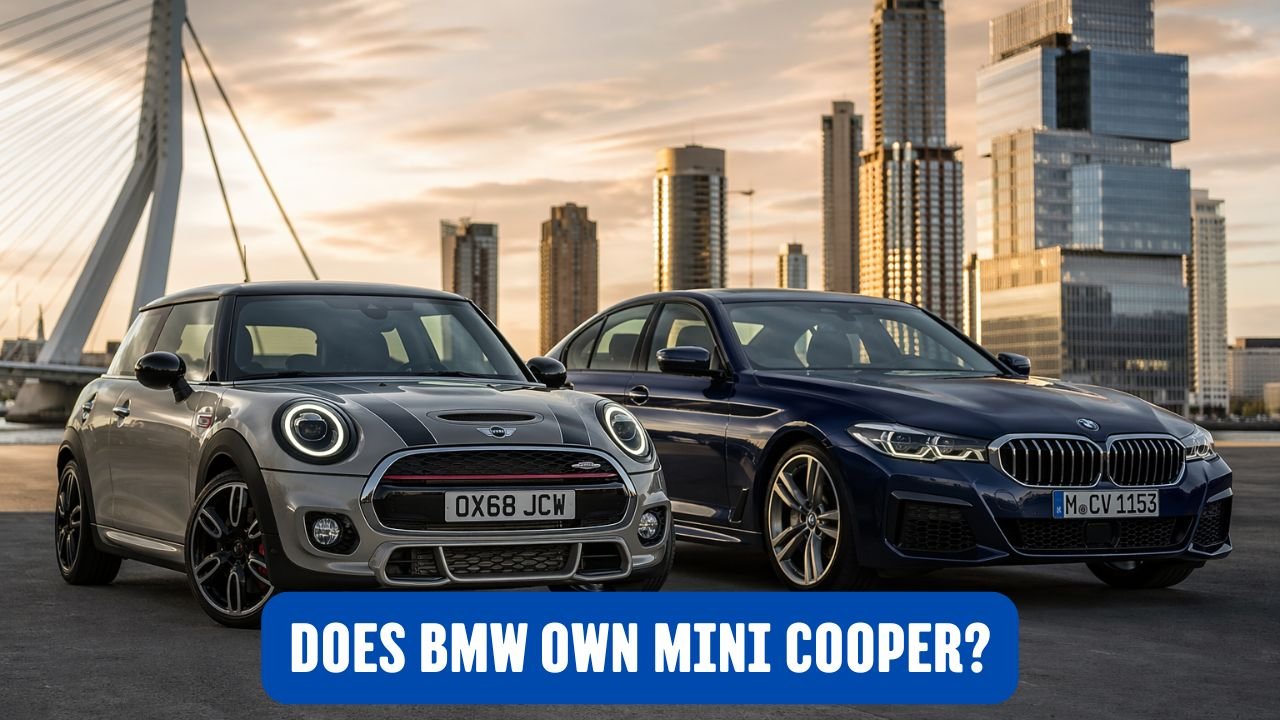
Yes—BMW owns Mini Cooper.
More precisely, the **Mini brand—including all Mini Cooper models—has been under BMW’s control since the 2000 restructuring of the Rover Group.
So if you’re asking, does BMW own Mini Cooper?—the answer is a clear yes, backed by over two decades of ownership.
Introduction
Does BMW own Mini Cooper? It sounds like a trick question. Mini feels as British as rainy afternoons and queueing politely. BMW, on the other hand, is all about Autobahn precision and engineering discipline.
Yet here we are—one owning the other.
This article breaks down not just whether BMW owns Mini, but how it happened, why it worked, and what it means today.
The History Behind Mini Cooper
To properly answer does BMW own Mini Cooper, we need to rewind to 1959.
The original Mini was launched by the British Motor Corporation (BMC) as a compact, fuel-efficient car during a time of economic pressure. It wasn’t just a car—it became a cultural symbol.
Performance versions, branded as Mini Cooper, elevated its status further, especially in rally racing.
Over time, the brand moved through several owners:
- British Motor Corporation
- British Leyland
- Rover Group
Each transition added complexity—and uncertainty.
How BMW Acquired Mini (1994–2000 Timeline)
Here’s where the ownership story becomes precise—and often misunderstood.
- In 1994, BMW acquired the Rover Group
- This included multiple brands: Rover, Land Rover, MG, and Mini
- By 2000, BMW restructured and sold most of the group
- Mini was the only brand BMW retained
This distinction matters.
BMW didn’t originally set out to “buy Mini”—it inherited it. But by 2000, it made a deliberate strategic decision to keep and rebuild the brand.
That decision changed everything.
What BMW Did to Revive Mini
Owning Mini was one thing. Making it relevant again? That required vision.
BMW relaunched Mini in 2001 with a completely new approach:
- Premium interiors
- Modern safety and tech
- Retro-inspired yet contemporary design
Instead of competing as a cheap small car, Mini became:
A premium compact with personality
And surprisingly, people were willing to pay for that personality.
Mini Today: British Roots, Global Production
So, does BMW own Mini Cooper today? Yes. But what is Mini today?
It’s a hybrid identity:
- Ownership: BMW (Germany)
- Heritage: British
- Production: Global
While the Oxford plant in the UK remains a key production hub, Mini has expanded manufacturing globally. For example:
- Production and assembly also take place in facilities like the BMW Group plant in Chennai, India, supporting regional demand (including newer models like the Countryman).
This global footprint reflects modern automotive strategy—build where the customers are.
Why BMW Keeps Mini Alive
BMW is not sentimental about brands—it’s strategic.
Mini serves a very specific role:
- Attracts younger, urban buyers
- Offers a premium entry point into BMW Group
- Strengthens presence in the compact segment
It also plays a role in electrification, with Mini positioned as a design-forward electric urban mobility brand.
Fun Facts About Mini and BMW
- The Mini was voted the second most influential car of the 20th century—by Autocar in 1999
- The “Cooper” name comes from racing legend John Cooper
- BMW nearly scrapped Mini before realizing its global potential
- Mini is now one of the most recognizable compact car brands worldwide
More Articles You Shouldn’t Miss
Renault Duster 2026 – The Comeback of the SUV That Refuses to Quit
TVS Orbiter v1: A New Electric Scooter That Could Redefine City Riding
Skoda Kushaq Facelift 2026: Bold Upgrade or Overhyped Refresh? (Full Review)
Final Thoughts
So, does BMW own Mini Cooper? Yes—and not just on paper.
BMW took a struggling legacy brand and:
- Preserved its identity
- Elevated its positioning
- Scaled it globally
It’s a rare case where corporate ownership didn’t dilute character—it refined it.
A small British icon, engineered with German precision, and sold to the world.
Not a bad collaboration, honestly.