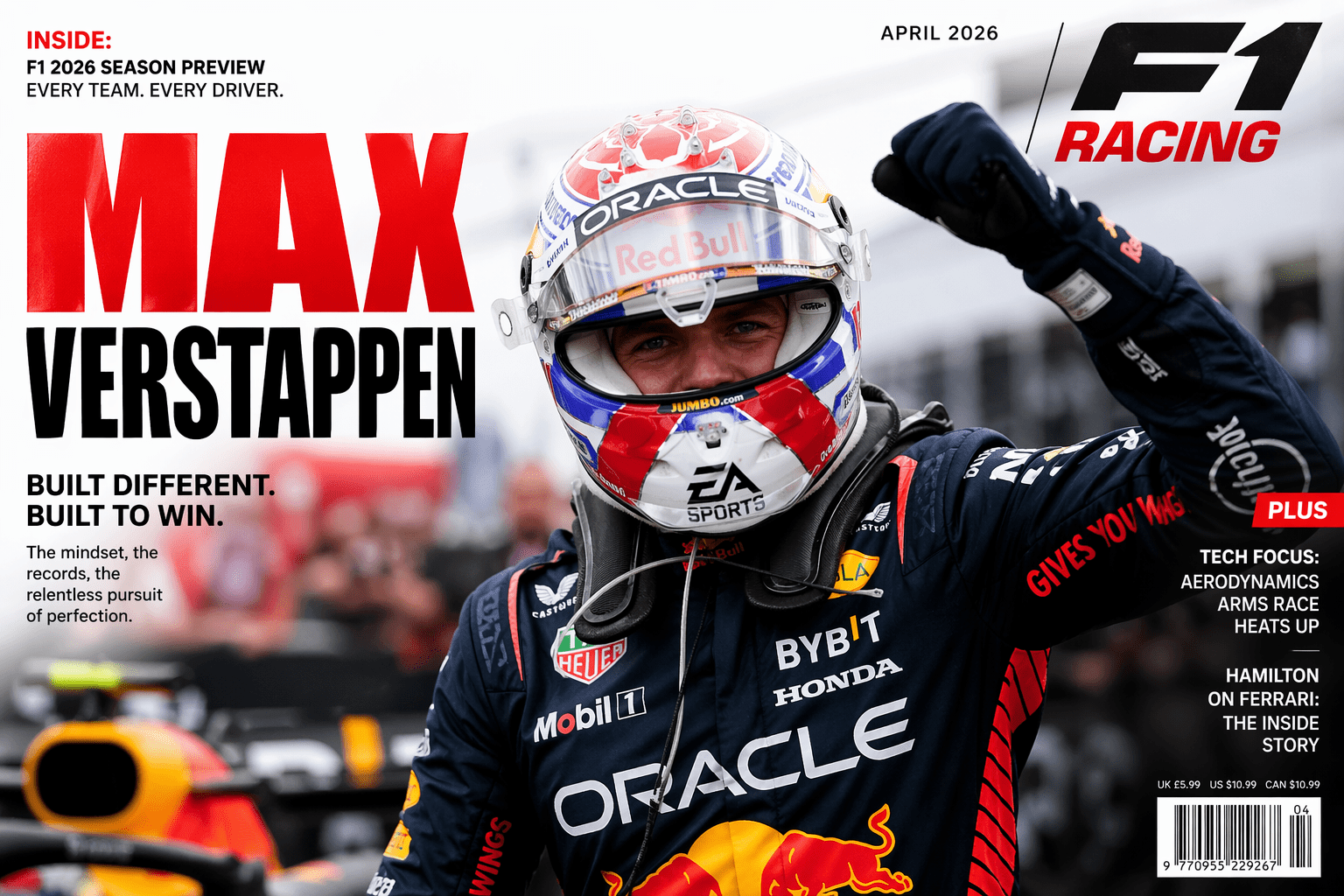
Max Verstappen is no longer just a name in Formula 1—he’s a benchmark. If you want to understand modern F1 dominance, you start with Max Verstappen and work your way backward. As of April 2026, he continues to redefine what it means to be fast, consistent, and—occasionally—ruthlessly efficient on a racetrack.
But how did a teenager with raw aggression evolve into a generational talent who makes winning look… routine?
Let’s unpack it.
Early Life of Max Verstappen
Max Verstappen was practically born into motorsport. The son of former F1 driver Jos Verstappen and karting champion Sophie Kumpen, racing wasn’t a career choice—it was destiny.
There’s a famous paddock joke: most kids learn to ride a bicycle at five; Max Verstappen was already trail-braking into corners.
His karting career was brutal, competitive, and incredibly successful. By his mid-teens, it was obvious—this wasn’t just another promising driver. This was a problem for everyone else on the grid.
Max Verstappen’s Rise in Formula 1
When Max Verstappen debuted with Scuderia Toro Rosso in 2015, he became the youngest driver in F1 history. At 17, most people are worried about exams—he was overtaking seasoned professionals at 300 km/h.
A year later, his promotion to Red Bull Racing changed everything.
He won his very first race with the team at the Spanish Grand Prix in 2016.
No easing in. No slow burn. Just straight to the top step.
Dominance Era: Records and Championships
The name Max Verstappen became synonymous with dominance during the early 2020s. His championship battles—especially against Lewis Hamilton—defined a generation of Formula 1.
By 2026, Verstappen has:
- Multiple World Championships (2021, 2022, 2023 confirmed dominance years)
- Dozens of race wins and pole positions
- Record-breaking win streaks
- One of the highest win percentages in modern F1
His 2023 season, in particular, is often described as “statistically absurd.” At one point, it felt like the only real competition for Max Verstappen… was Max Verstappen.
Driving Style: What Makes Max Verstappen Special
Trying to explain Max Verstappen’s driving style is like explaining why espresso hits harder than regular coffee—it just does.
But let’s break it down:
1. Aggression with Precision
Max Verstappen attacks corners with surgical aggression. He brakes late, rotates the car aggressively, and exits faster than most drivers dare to attempt.
2. Race Intelligence
He doesn’t just drive fast—he thinks fast. Tire management, race positioning, and split-second decisions separate him from the rest.
3. Consistency Under Pressure
While others crack under pressure, Max Verstappen seems to thrive on it. Rain, safety cars, chaotic restarts—he adapts instantly.
4. Confidence (Borderline Intimidation)
There’s an aura around Max Verstappen. When he’s behind you, you know he’s coming through. Resistance often feels… temporary.
Max Verstappen in the 2026 Season
As of April 2026, Max Verstappen remains a central figure in Formula 1’s competitive landscape.
While regulations and rival teams have tightened the grid, Red Bull’s performance—combined with Verstappen’s consistency—keeps him firmly in title contention.
Key observations from 2026 so far:
- Strong qualifying pace
- Strategic race execution
- Continued partnership strength with Red Bull
- Increased pressure from teams like Mercedes-AMG Petronas Formula One Team and Scuderia Ferrari
If previous seasons taught us anything, it’s this: writing off Max Verstappen mid-season is a mistake people keep making.
Rivalries and Challenges
No great story exists without conflict, and Max Verstappen has had his fair share.
Lewis Hamilton Rivalry
The 2021 season battle between Max Verstappen and Lewis Hamilton is now part of F1 folklore. It wasn’t just racing—it was psychological warfare at 300 km/h.
New Generation Threats
Drivers like Charles Leclerc and Lando Norris are closing the gap.
The difference? Verstappen has already been through the fire. They’re still learning how hot it gets.
The Philosophy of Max Verstappen
Here’s where it gets interesting.
Max Verstappen doesn’t chase legacy in the traditional sense. He’s often said he races because he loves racing—not for records, not for headlines.
And ironically, that mindset is exactly what’s building his legacy.
There’s a quiet paradox here:
The less he tries to be legendary, the more legendary he becomes.
More Articles You Shouldn’t Miss
Renault Duster 2026 – The Comeback of the SUV That Refuses to Quit
TVS Orbiter v1: A New Electric Scooter That Could Redefine City Riding
Skoda Kushaq Facelift 2026: Bold Upgrade or Overhyped Refresh? (Full Review)
Conclusion
Max Verstappen isn’t just dominating Formula 1—he’s redefining it.
In an era filled with advanced simulations, data analytics, and engineering precision, he remains the unpredictable human variable that machines can’t replicate.
He’s fast, yes. But more importantly, he’s inevitable.
And if 2026 continues on its current trajectory, one thing is certain:
The grid isn’t just racing each other anymore—they’re racing Max Verstappen.